
Implant dentistry
Ceramic (Zirconia) Implants in Houston
The metal-free implant: a white, biocompatible ceramic root that holds like titanium — preferred by our wellness-minded patients.

A metal-free way to replace a tooth
For patients who want metal out of the equation, Dr. Basil reaches for zirconia — a tissue-friendly, all-ceramic implant that fits the practice’s biocompatible philosophy.
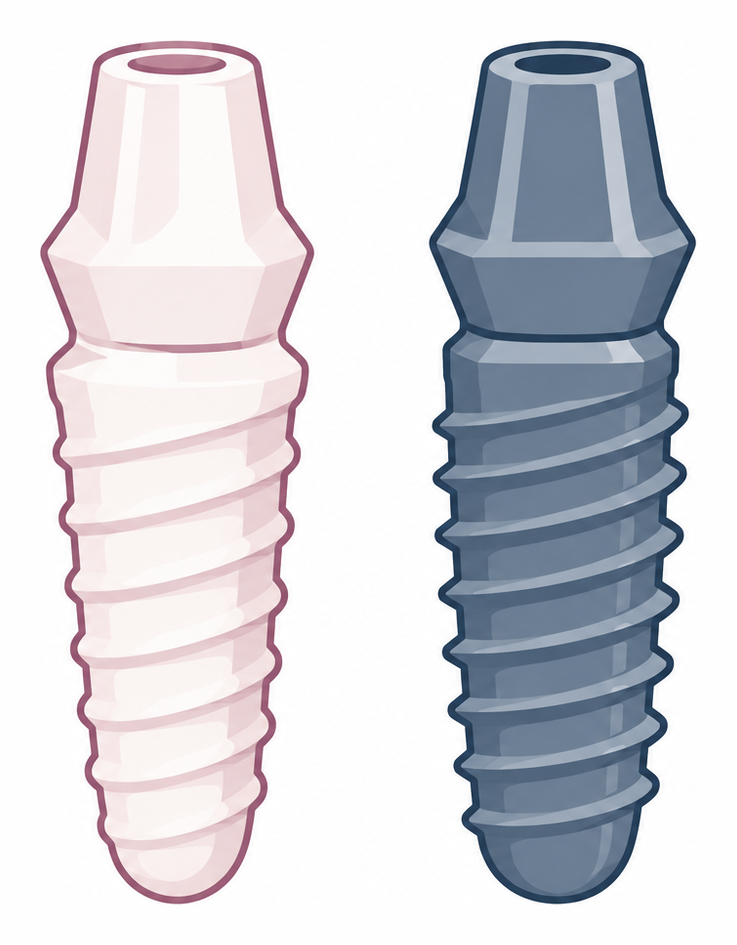
A zirconia implant does the same job as a titanium one — a root anchored in the jaw, topped with a crown that looks and works like your own tooth — but the material is a white, metal-free ceramic. For patients who prefer to keep metal out of their body, who have metal sensitivities, or who simply want the most natural-looking result at the gumline, zirconia is the implant we reach for.
It fits naturally with how this practice thinks. As a wellness and biological dentistry practice, we choose biocompatible materials everywhere we can — and zirconia is the implant world’s clearest expression of that. It integrates with bone the way titanium does, resists plaque well, and because the material is white, there is never a grey shadow showing through thin gum tissue.
Zirconia or titanium?
Both are excellent, well-proven implants, and we place both. Titanium has the longest track record; zirconia is the biocompatible, metal-free choice with superior esthetics in the smile zone. Which fits you depends on where the tooth is, your bite, your health priorities and your preferences — exactly the conversation your consultation is for.
Metal-free
white ceramic, no grey shadow at the gum
Biocompatible
the wellness practice’s implant of choice
3D-guided
planned and placed digitally by Dr. Basil
Why the material matters here
In a biological practice, what we put in your body is a decision, not an afterthought. Zirconia is a medical-grade ceramic: metal-free, exceptionally tissue-friendly, and inert — it releases no metal ions into the surrounding bone and gum. Gum tissue tends to sit beautifully against it, and because the material is white all the way through, there’s never a gray shadow at the gumline as gums naturally change over the years.
For patients with known metal sensitivities, patients who test reactive to titanium, or simply patients who want their dentistry consistent with a metal-free philosophy, zirconia makes the implant conversation easy.
What to expect
The process mirrors any well-planned implant: a 3D scan and digital plan first, a precise placement appointment (calmer and shorter than most people expect — sedation is available if you want it), a healing period of a few months while the implant integrates with your bone, and then the final ceramic crown. Most patients are back to their routine the next day, managing any tenderness with over-the-counter relief.
Zirconia and titanium, honestly compared
Titanium is a superb, proven implant material, and in certain situations — specific angles, certain bite forces, some multi-implant designs — it can still be the wiser engineering choice. We’ll tell you which is right for your case and why, with the comparison in front of you. What we won’t do is pretend there’s only one answer: the right material is the one that serves your mouth, your health priorities and your long-term result.
Is it right for you?
Who zirconia implants are for
A consultation settles it either way — zirconia may be right for you if:
- You want a tooth replaced without metal in your body
- You have, or suspect, sensitivities to metals
- The missing tooth is in your smile zone, where esthetics matter most
- You follow a holistic or biological approach to your health
- You have thin or receding gum tissue where grey show-through is a risk
- You’re already a candidate for a conventional implant — the process is the same
Good to know
Zirconia implant questions, answered
Are zirconia implants as strong as titanium?
Modern zirconia is a high-strength ceramic engineered for implants, and for most single-tooth and cosmetic-zone cases it performs beautifully. In high-load situations Dr. Basil will tell you plainly which material his judgment favors for your bite — the recommendation is always case by case.
Do zirconia implants integrate with bone?
Yes. Zirconia osseointegrates — fuses with the jawbone — much as titanium does, which is what gives an implant its stability.
Are they more expensive than titanium implants?
Usually somewhat, reflecting the material and components. After your consultation you’ll have an exact written figure for your case, with financing options — never an estimate that changes later.
How do I know if I have a metal sensitivity?
Some patients already know from reactions to jewelry or other implants; others simply prefer to avoid the question entirely. Tell us your history at the consultation and we’ll factor it into the plan together.
How long do zirconia implants last?
Modern zirconia implants are built for the long haul — decades, with the same things that protect any implant: healthy gums, good daily care, and regular hygiene visits. The ceramic itself is extraordinarily hard and doesn’t corrode.
Are zirconia implants good for front teeth?
They’re at their very best there. The all-white material under thin front-tooth gum tissue gives the most natural gumline esthetics implant dentistry can offer — no metal to hide.
Is healing any different from a titanium implant?
No — zirconia integrates with bone the same way, on the same general timeline of a few months. Your care during healing is identical, and we monitor integration before the final crown goes on.


No cases in this category yet.
Ready to transform your smile?
Book a consultation, or call us — we keep room for emergencies during office hours.