
Implant dentistry
Full-Arch Dental Implants in Houston
A complete upper or lower smile, anchored on four to six implants — fixed in place, nothing removable, planned digitally around your face.
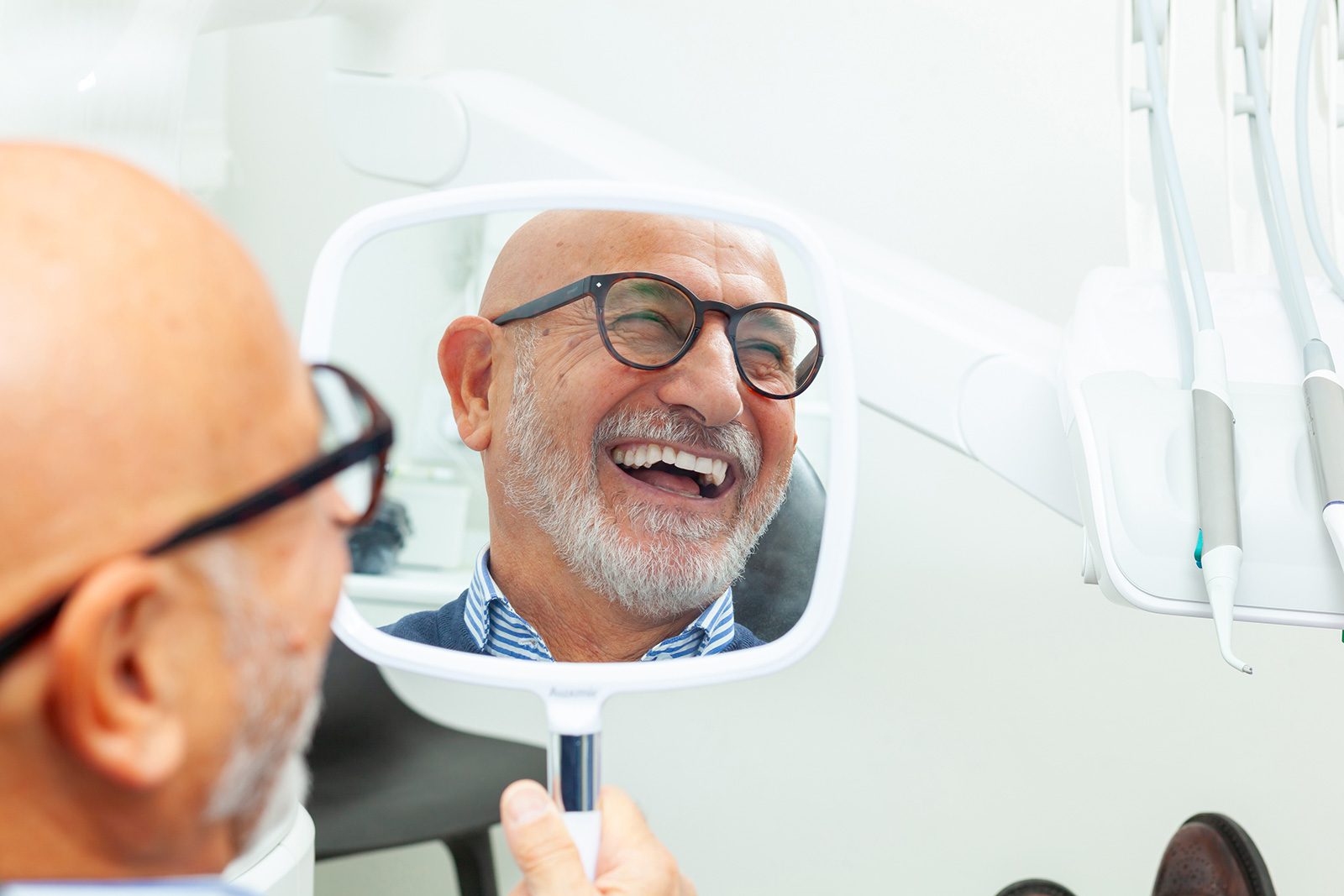
A whole new smile on four to six implants
Dr. Basil plans full-arch treatment around your whole health — clearing infection, restoring real chewing, and designing a fixed smile you stop having to think about.
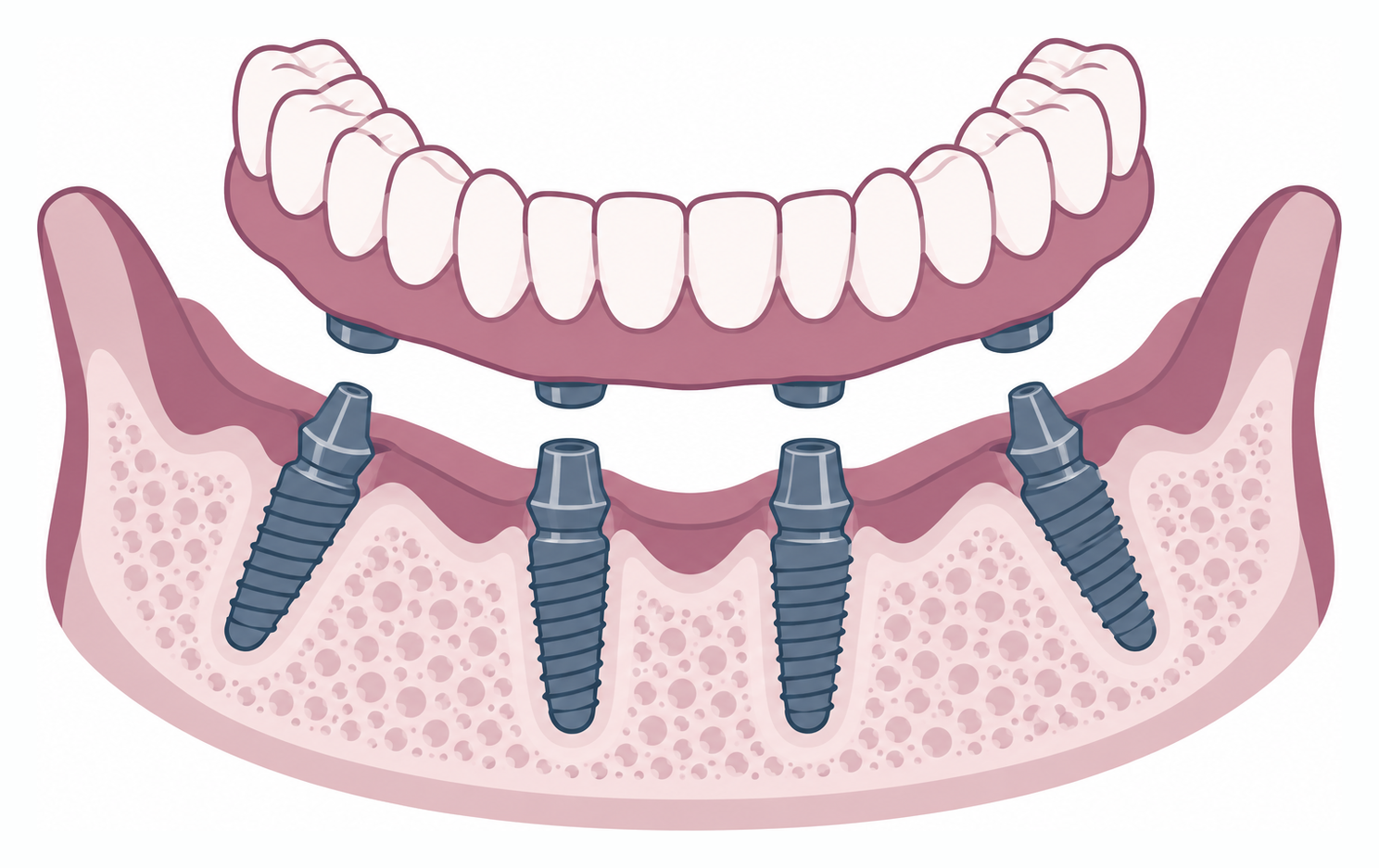
When most or all of the teeth in an arch are missing or failing, replacing them one by one stops making sense. Full-arch treatment — often called All-on-4 or All-on-6 — anchors a complete row of teeth on just four to six precisely placed implants. The result is fixed in your mouth: it doesn’t come out at night, doesn’t slip when you eat, and looks and works like the teeth you were meant to have.
At Dental Illusions the entire treatment happens in one Houston practice. Dr. Basil plans your case digitally with 3D imaging, places the implants with guided precision, and designs your new teeth around your face — the same Digital Smile Design process behind every smile we build. You’ll see the plan, and your new smile, before treatment begins.
Why patients choose a fixed full arch
Compared with a traditional denture, a fixed full arch is a different life. There’s no adhesive and no soreness from movement, and because the implants stimulate the jaw the way roots do, the bone — and the shape of your face — is preserved instead of shrinking year by year. Most patients eat the foods they’d given up, and stop thinking about their teeth entirely.
Because oral health is the foundation of overall health, the plan starts wider than the teeth: gum health, bite forces and the condition of the jaw all shape where the implants go and what your new arch is made of. Metal-free, biocompatible materials are available throughout.
4–6 implants
support a complete upper or lower arch
Fixed
never removed at night, no adhesive
1 practice
planned, placed and restored by Dr. Basil
Life before and after failing teeth
People live with failing teeth far longer than they should — soft-food menus, covering a smile in photos, chewing on one careful side. There’s also a quieter cost: a mouth full of failing or infected teeth is a chronic bacterial burden the rest of the body carries every day. Clearing that infection and rebuilding on implants isn’t only cosmetic; it restores real chewing (and with it, real nutrition), steady comfort, and the kind of confidence people tell us they’d forgotten.
That’s why we treat full-arch dentistry as whole-health dentistry: the end point isn’t just a beautiful row of teeth, it’s a clean, stable, healthy foundation you stop having to think about.
The road map, visit by visit
It starts with a consultation and a 3D scan — the scan shows your bone in detail, which is what actually determines the plan. Your new smile is then designed digitally before anything happens, as part of our Digital Smile Design workflow, so the teeth you end up with were planned around your face, not improvised.
On surgery day, the implants are placed — guided by the digital plan — and a fixed provisional bridge is attached, so you leave with teeth the same day. Over the following months the implants fuse with the bone while you live comfortably on the provisional. Then the final bridge, milled in strong ceramic and refined to the design you approved, replaces it.
Living with your new arch
A full-arch bridge is cared for like natural teeth with one addition: cleaning along the gumline beneath it, which a water flosser and small brushes handle in a couple of minutes a day. Your hygiene visits here use implant-safe Guided Biofilm Therapy, which cleans around implants without scratching them, and we check the bridge, your bite and the gum health around every implant at each visit. Cared for that way, full-arch work is a long-term answer, not a stopgap.
Is it right for you?
Who full-arch implants are for
Full-arch treatment suits most healthy adults facing the loss of many or all of the teeth in an arch. It may be right for you if:
- Most or all of the teeth in your upper or lower arch are missing or failing
- You wear a denture and are tired of the movement, the adhesive and the limits
- You’re facing multiple extractions and want to plan the whole outcome, not patch tooth by tooth
- You want teeth that are fixed in place and cared for like natural teeth
- You’ve been told you lack bone for implants — angled full-arch placement often changes that answer
- You want a metal-free option — ceramic materials are available
What to expect
Your new smile, step by step
Every full-arch case follows the same careful path — you’ll know what’s happening and why at every visit.
Good to know
Full-arch implant questions, answered
What’s the difference between All-on-4 and All-on-6?
The number of implants supporting the arch. Four is often enough; six spreads the load further and can be the better choice depending on your bone and bite. It’s a clinical decision Dr. Basil makes with you from your 3D scan — not a menu you have to choose from blind.
Will I be without teeth during healing?
No. A fixed provisional arch is attached at the placement visit, so you leave with teeth the same day. The final arch is fitted once the implants have fused with the bone.
Is the procedure painful?
The area is fully numbed and sedation options — nitrous oxide or oral sedation — are available if visits make you anxious. Most patients describe the recovery as far easier than they feared, managed with ordinary over-the-counter medication.
What does full-arch treatment cost?
It depends on the arch, the materials and whether extractions or grafting are needed first — which is why we won’t quote a number before examining you. After your consultation you’ll have an exact written figure and financing options. Nothing changes partway through.
How do I care for a full-arch bridge?
Much like natural teeth — brushing, cleaning under the bridge as we show you, and regular hygiene visits. Cared for properly, full-arch restorations are designed to last for decades.
I was told I don’t have enough bone. Can I still have this?
Often, yes. Full-arch techniques place implants at angles that use the strongest available bone, which frequently avoids grafting altogether. The honest answer comes from a 3D scan — many patients told “no” elsewhere turn out to be candidates.
How long does the whole process take?
You have fixed teeth from surgery day. The finish line — your final ceramic bridge — typically comes after three to six months of healing, once the implants have fully fused with the bone. In between, you’re living, eating and smiling on the provisional.
I wear a denture now. Is this different?
Completely. A denture rests on the gum and moves; a full-arch bridge is anchored to implants and doesn’t. No adhesive, no covering the palate, no taking it out at night — and because implants stimulate the bone, the bone loss a denture allows is halted.


No cases in this category yet.
Ready to transform your smile?
Book a consultation, or call us — we keep room for emergencies during office hours.