
Cosmetic dentistry
Invisalign in Houston
Straighter teeth without brackets and wires — clear, removable aligners, with your end result planned on screen before you begin.
Curious what yours could look like? Upload a photo — see your smile now →
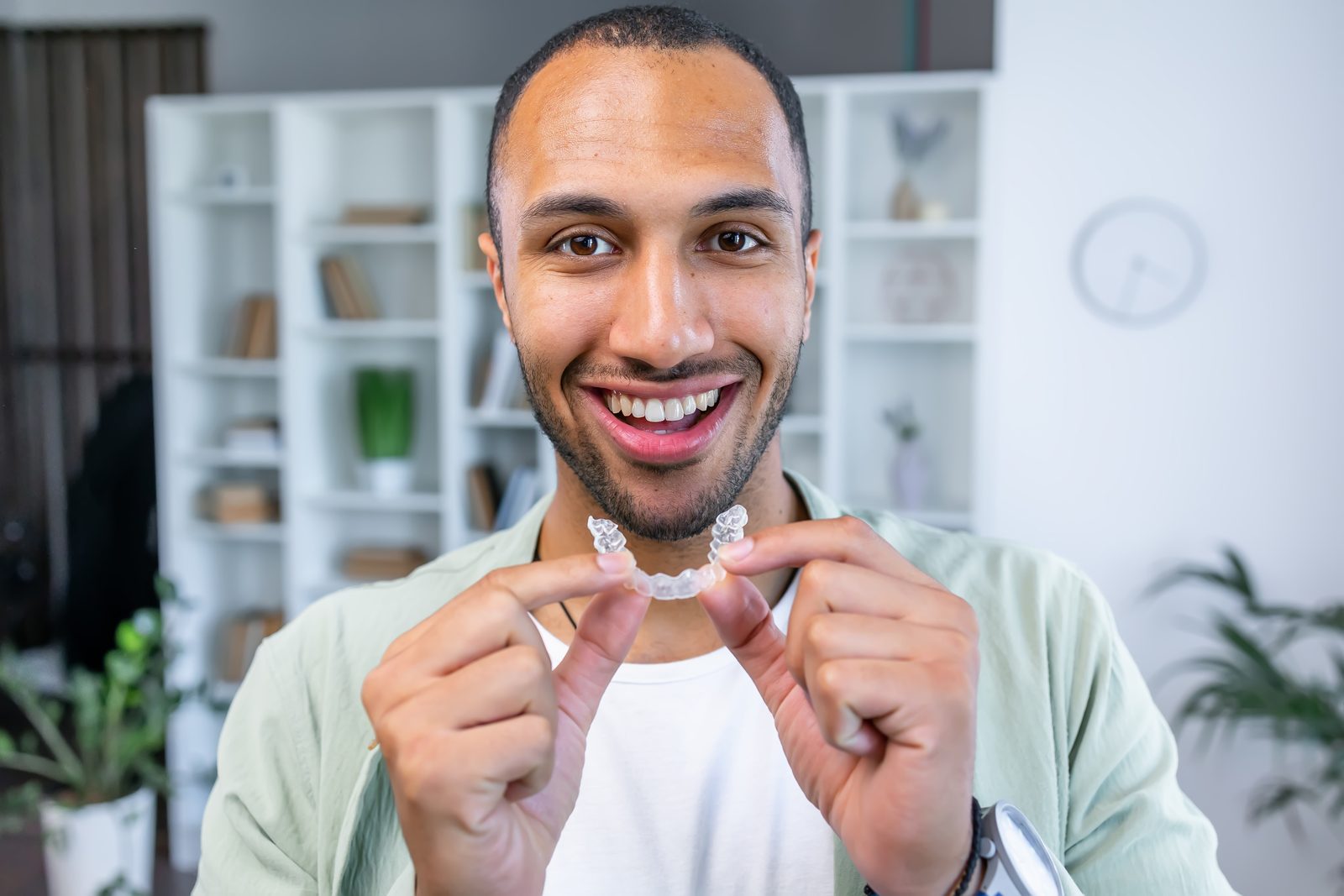
How clear aligners work
Dr. Basil treats alignment as a health decision as much as a cosmetic one — straighter teeth are easier to keep clean and spread your bite more evenly.
Invisalign moves teeth with a series of clear, custom trays, each worn about two weeks, each nudging your teeth a fraction closer to the plan. The plan itself is built digitally from a 3D scan — which means you see the projected end result before the first aligner is made, not after two years of hoping.
The day-to-day reality is what wins people over: the aligners are nearly invisible, and they come out to eat, brush and floss. No food restrictions, no wire pokes, no emergency bracket visits — just wear them the prescribed 20–22 hours a day and change trays on schedule.
Straight teeth are a health decision too
Alignment isn’t only cosmetic. Crowded teeth trap plaque where a brush can’t follow; a misaligned bite concentrates force on teeth that weren’t built for it. Straightening improves both — which is why aligner treatment often appears inside our larger smile and health plans, not just on its own.
Straight teeth are a health decision
Alignment isn’t only about the photo. Crowded, overlapping teeth create hiding places that brushes and floss can’t reach — which is why crowding and gum inflammation so often travel together — and a misaligned bite concentrates force where it shouldn’t, wearing enamel, chipping edges and straining the jaw. Straightening your teeth makes every day of hygiene easier and every bite better distributed. In a whole-health practice, that’s the real case for orthodontics; the beautiful smile is the bonus.
The process here
It starts with a 3D scan — no goopy impressions — and a digital treatment plan that shows your projected result before the first aligner is made. Trays arrive in a series; most patients change them every one to two weeks and check in with us every six to eight weeks, which is a few minutes, not a production. Small tooth-colored attachments on certain teeth are common (you’ll see exactly where in the plan), refinement trays at the end are normal, and retainers afterward protect the result — teeth have long memories.
Living in aligners
The honest daily reality: trays in twenty to twenty-two hours a day, out for meals and coffee, a quick brush before they go back in. Speech adjusts within days; most people around you never notice. The discipline is real but mild — and unlike braces, nothing is off the menu, because the aligners are in your pocket while you eat.

Free · About 60 seconds
See your new smile — before you ever sit in the chair
Upload a selfie and get an instant preview of what whitening, veneers or a smile makeover could look like on your face.
Is it right for you?
Who Invisalign is for
Aligners handle far more than they used to. Good candidates include:
- Crowded or overlapping front teeth
- Gaps you’d like closed
- Teeth that have shifted since braces years ago
- Mild to moderate bite issues
- Adults and teens who won’t wear metal braces
- Smiles being aligned as step one of a bigger design
Good to know
Invisalign questions, answered
How long does Invisalign take?
Simple cases can finish in a few months; typical comprehensive cases run 12–18 months. Your digital plan shows the projected timeline before you commit.
Does it hurt?
Expect pressure for a day or two with each new tray — that’s teeth moving. It’s consistently described as far more comfortable than braces.
Will people notice I’m wearing them?
Most won’t. The trays are thin and clear, and they come out for photos, presentations and dinners — discipline about putting them back in is the real requirement.
What happens when treatment ends?
Retainers — teeth drift for life without them. We’ll set you up with retainers and a simple wear schedule to protect the result.
How long does Invisalign take?
Many adult cases run six to eighteen months, and minor corrections can be shorter. Your 3D scan produces your actual number — a projected timeline you see before committing, not a guess revised later.
Does Invisalign hurt?
The first day or two of each new tray brings pressure — the feeling of teeth getting on with the job — and it fades fast. Most patients describe it as awareness, not pain. No wires, no poking, no emergency visits for a bracket.
Will I need attachments or elastics?
Many cases use a few small tooth-colored attachments that help the aligners grip; some bites also use discreet elastics. Your digital plan shows every attachment before you start, so there are no surprises at the first fitting.


Ready to transform your smile?
Book a consultation, or call us — we keep room for emergencies during office hours.