
Wellness & biological dentistry
Guided Biofilm Therapy in Houston
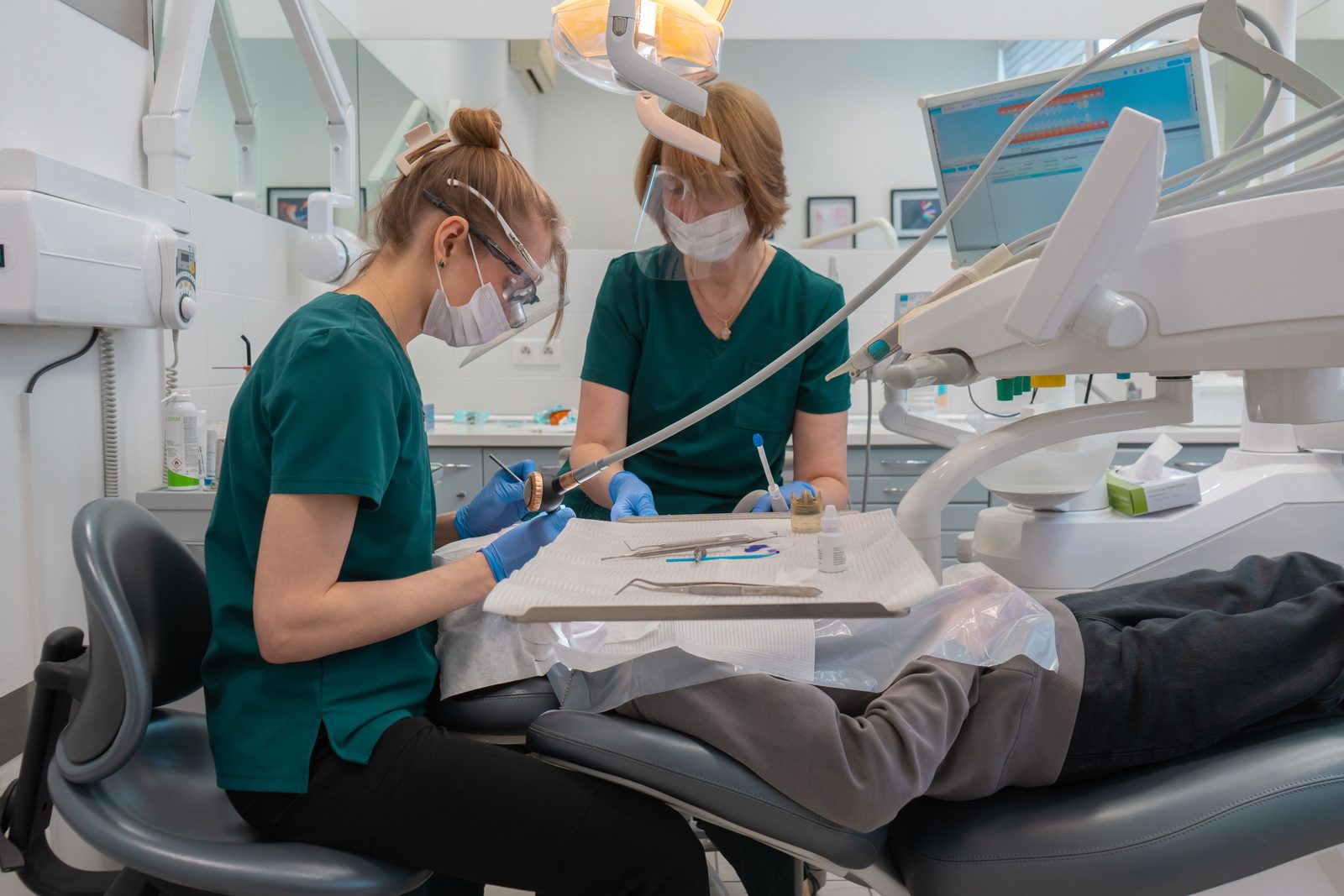
The modern professional clean: the biofilm is made visible, then lifted away gently with airflow technology — most patients never go back to the old scrape.
A smarter sequence, a gentler clean
Dr. Basil’s hygiene standard makes the invisible visible — disclosing biofilm so it can be removed completely and gently, visit after visit.
Guided Biofilm Therapy re-engineers the professional cleaning around one idea: you can’t thoroughly remove what you can’t see. The visit starts by disclosing the biofilm — a harmless dye tints the bacterial film so both of us can see exactly where it lives, including the spots your brush has been missing for years. Then it’s removed with a warm, fine stream of air, water and powder that cleans every surface — enamel, roots, around implants and braces — with remarkable gentleness.
Hard tartar still gets instrumented where it exists, but precisely and minimally — the airflow does the bulk of the work. The result: a cleaner clean than traditional scaling-and-polishing, with dramatically less scraping, less sensitivity, and no gritty paste.
Why it fits this practice
GBT is prevention technology: kinder to enamel, safe around implants and cosmetic work, and honest — the disclosing dye shows you your home-care blind spots instead of lecturing you about them. It’s the standard hygiene experience here, and the heart of our preventive program.
How the visit flows
GBT follows a defined sequence, and each step has a reason. First, assessment — gums are examined and measured so we know what today’s visit needs to achieve. Then the biofilm is disclosed: a harmless tint makes the invisible bacterial film visible, turning the cleaning from guesswork into a map. We’ll show you that map — it’s the single best home-care lesson there is, because it shows precisely where your brush isn’t reaching.
Then the AIRFLOW® step removes the disclosed biofilm and early stains with a warm, fine stream of water, air and erythritol powder — across enamel, exposed roots, implants, aligner attachments and orthodontic wires alike. Only after the biofilm is gone do instruments come out, and only where hardened tartar actually remains. The visit ends with a quality check and a recall interval set to your risk, not to a calendar habit.
Why gentler is also more effective
Traditional cleanings scrape and polish — effective on tartar, but hard on root surfaces and unable to show whether the biofilm is truly gone. GBT inverts the logic: make the enemy visible, remove it with something gentle enough to use everywhere, and reserve instruments for the few spots that need them. Less scraping, no gritty paste, and surfaces — including implant surfaces and cosmetic work — treated kindly.
Comfort isn’t a luxury here; it’s compliance. People keep appointments they don’t dread. For patients who’ve avoided cleanings for years because of sensitivity or one rough experience, GBT is routinely the visit that resets the relationship.
Part of your whole-health picture
Biofilm is the engine behind decay and gum disease, and chronic gum inflammation adds to the inflammatory load your whole body carries. A hygiene program that actually controls biofilm — verified visually, visit after visit — is one of the most understated wellness habits there is. It’s why we treat the hygiene appointment as the cornerstone of care rather than the warm-up act.
Is it right for you?
Who GBT is for
In a word: everyone. It especially shines if:
- You dread the scraping of traditional cleanings
- Your teeth feel sensitive for days after a cleaning
- You have implants, veneers or orthodontic work to clean around
- You want to actually see what your brushing is missing
- You’re in periodontal treatment and need thorough, regular biofilm control
- You’re bringing kids — it’s the friendliest clean they’ll ever have
Good to know
GBT questions, answered
Does Guided Biofilm Therapy hurt?
It’s the gentlest thorough cleaning in modern dentistry — warm water, fine powder, minimal instruments. Sensitive patients are usually its biggest converts.
Is it as effective as a traditional cleaning?
More thorough, in fact — the disclosure step means nothing gets missed, and the airflow reaches surfaces instruments struggle with, including implant surfaces that metal tools shouldn’t touch.
What’s the dye about? Will it stain?
It’s a temporary disclosing agent that tints biofilm so we can see it — and it’s completely removed as part of the clean. You’ll leave polished, not purple.
Is GBT safe for implants and cosmetic work?
Yes — that’s one of its biggest advantages. The airflow system cleans implants, crowns, veneers and aligner attachments without scratching them.
How long does a GBT visit take?
About the same as a traditional hygiene visit — typically 45 to 60 minutes. The sequence is different, not longer: assessment, disclosure, AIRFLOW® biofilm removal, then targeted instrumentation only where tartar remains.
How often should I have GBT?
At the recall interval your risk sets — commonly every three, four or six months. Because the disclosing step shows exactly how much biofilm accumulated since last time, your interval is based on evidence from your own mouth, and it can lengthen as your home care improves.
I’ve avoided cleanings for years. Is this a good way back in?
It’s the best one we know. GBT is gentle enough for sensitive mouths, the visit starts with assessment rather than scolding, and the disclosed-biofilm map turns the appointment into information instead of judgment. Come as you are.

Ready to transform your smile?
Book a consultation, or call us — we keep room for emergencies during office hours.