
Cosmetic dentistry
Porcelain Veneers in Houston
Wafer-thin porcelain that reshapes your smile — designed on your face first, and placed as conservatively as your case allows.
Curious what yours could look like? Upload a photo — see your smile now →

What veneers actually are
Dr. Basil designs veneers around your face first, then crafts them to the smile you approved — never a one-shape-fits-all set.
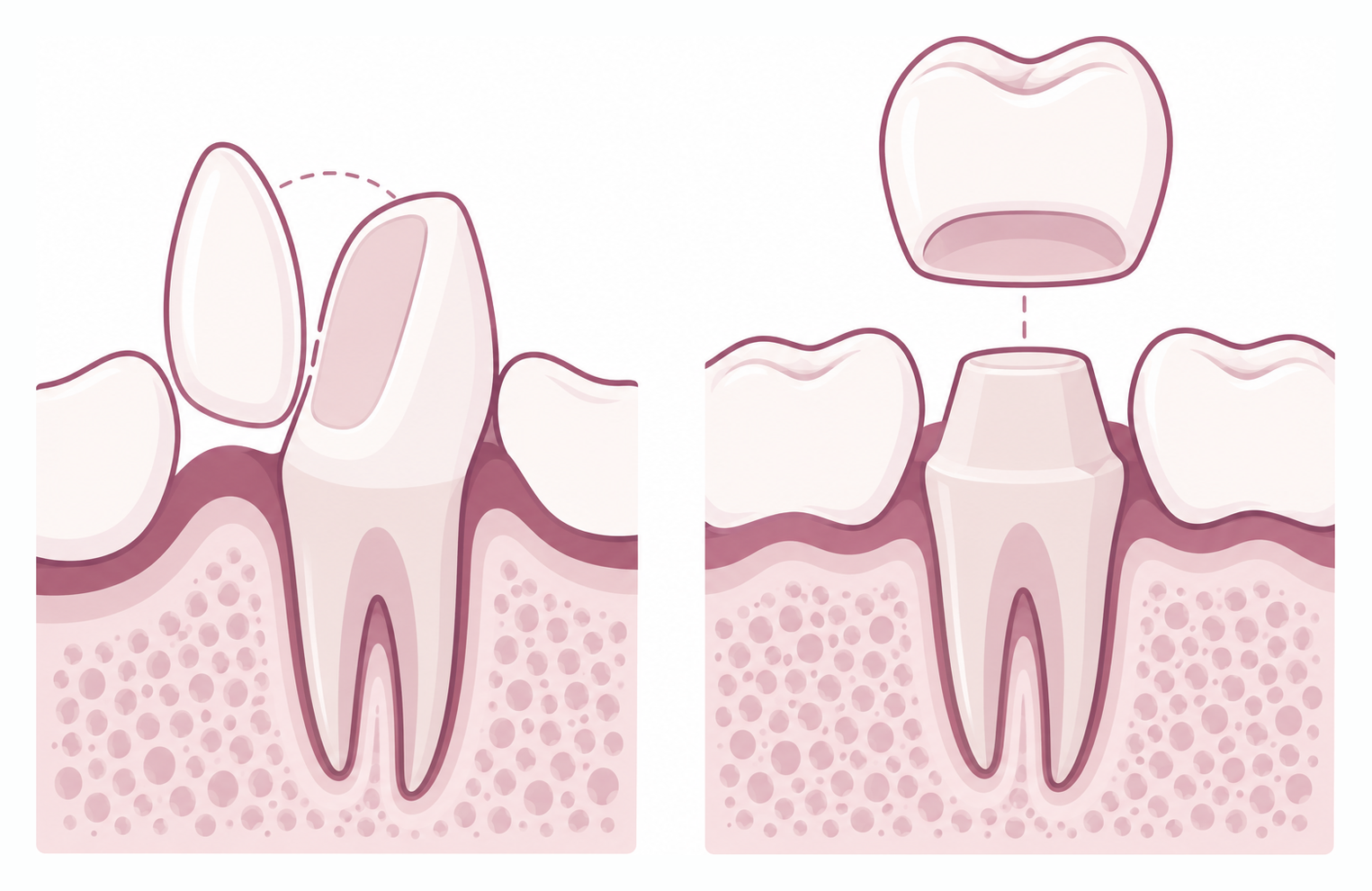
A veneer is a thin shell of porcelain bonded to the front of a tooth — changing its shape, length, color and alignment in one move. A single veneer can rescue one damaged tooth; a set can redesign an entire smile. Porcelain is the material of choice because it behaves like enamel: it has the same translucency, resists staining, and looks like a tooth rather than a cover on one.
As a certified Digital Smile Design clinic, we never design veneers tooth by tooth. Your whole smile is designed around your face — photographed, filmed and scanned — and you preview the result, including a physical trial smile you can wear, before a single tooth is touched. What you approve is what gets made.
No-prep and minimal-prep: keeping your enamel
Traditional veneers require shaping the tooth first. Where your case allows, we use no-prep or minimal-prep veneers instead — preserving healthy enamel, in keeping with the practice’s whole-health philosophy: the best dentistry removes as little healthy tooth as possible. Whether your case qualifies is exactly what the consultation determines.
Designed before they’re made
Veneer cases here begin in our Digital Smile Design workflow: your new smile is designed digitally on photos and video of your own face, then transferred to a trial smile you wear over your real teeth before anything is prepared. You approve the result first — shape, length, shade, how it moves when you talk — and the veneers are crafted to that approved design, not to a guess.
We offer both conventional and no-prep veneers, and we’ll tell you honestly which your teeth suit. No-prep preserves the most enamel but isn’t right for every smile; conventional veneers need only a conservative preparation when planned well. The design dictates the technique — never the other way around.
What to expect, visit by visit
After the design is approved: a preparation visit where the teeth are shaped as minimally as the plan allows (comfortably numbed) and a precise digital scan is taken, a short stretch wearing well-made temporaries shaped like your final design, and then the bonding visit — each porcelain veneer tried in, verified against the design, and bonded. The transformation day is meticulous and unhurried; it’s the payoff of all that planning.
Living with veneers
Porcelain doesn’t stain or decay, but the teeth under it are still yours: daily care and regular hygiene visits protect the margins where veneer meets tooth, and our ceramic-safe cleaning protocols treat them kindly. If you grind at night, a slim night guard protects the investment. Cared for that way, veneers stay beautiful for many years.

Free · About 60 seconds
See your new smile — before you ever sit in the chair
Upload a selfie and get an instant preview of what whitening, veneers or a smile makeover could look like on your face.
Is it right for you?
Who veneers are for
Veneers may be the answer if:
- Your teeth are chipped, worn, or uneven in length
- Deep staining doesn’t respond to whitening
- You have gaps you’d like closed without braces
- One “odd” tooth throws off an otherwise good smile
- You want a complete smile transformation, designed first
- Your teeth and gums are healthy — or you’re ready to get them there first
Good to know
Veneer questions, answered
How long do porcelain veneers last?
Well-made, well-fitted veneers commonly last 10–15 years and often longer, cared for like natural teeth — brushing, flossing, hygiene visits, and a nightguard if you grind.
Will they look fake?
Not designed this way. Shape and shade are chosen around your face and previewed on it — you’ll have seen and approved your exact result before we make anything.
Do veneers ruin your teeth?
A veneer protects the surface it covers. Where preparation is needed it’s conservative, and where your case allows no-prep, we don’t drill at all. The consultation will tell you which your case is.
What do veneers cost in Houston?
It depends on how many teeth and the design work involved. After your consultation and smile design you’ll have an exact written figure, with financing options.
How many veneers will I need?
Whatever the design says — sometimes two, often six to ten across the smile line. We don’t sell veneers by the bundle; the digital design shows exactly which teeth need porcelain and which can be left alone or simply whitened to match.
Do veneers ruin your natural teeth?
Done conservatively, no — and conservative is the only way we do them. No-prep veneers remove nothing; conventional preparation removes a thin layer of enamel. We’ll be honest about one thing most offices skip: a prepared tooth will always need a restoration on it, which is exactly why we prepare minimally and only when the design justifies it.
Can veneers be whitened later?
No — porcelain holds its shade (which is a feature, not a flaw). That’s why whitening comes first: we brighten your natural teeth to the shade you want, then match the veneers to it.


Ready to transform your smile?
Book a consultation, or call us — we keep room for emergencies during office hours.