
General dentistry
Dental Crowns in Houston
When a tooth needs more than a filling: full-coverage, all-ceramic protection that looks and works like the tooth it saves.
Curious what yours could look like? Upload a photo — see your smile now →
What a crown does
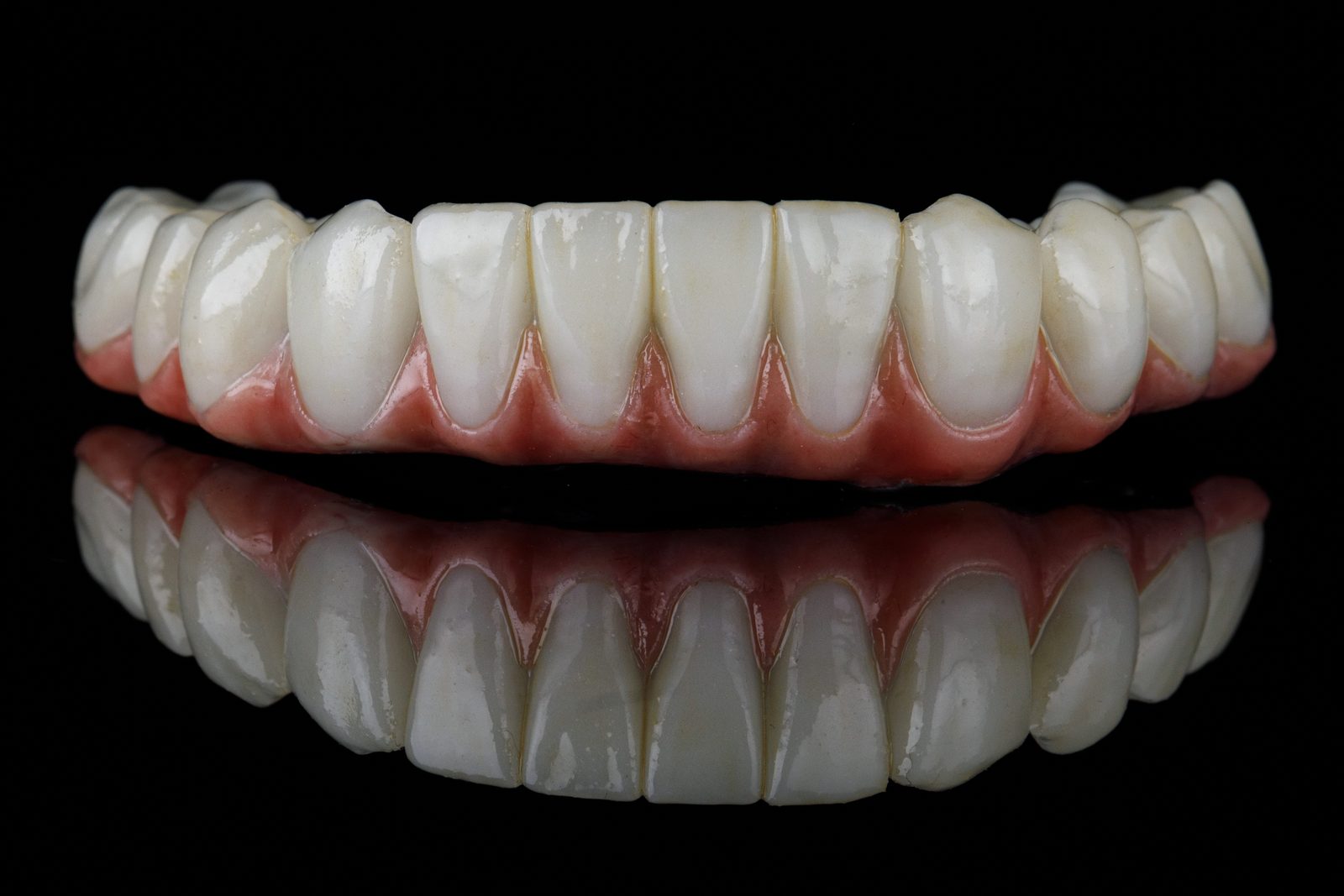
Dr. Basil designs crowns to disappear — all-ceramic, shade-matched, with no dark metal line at the gum.
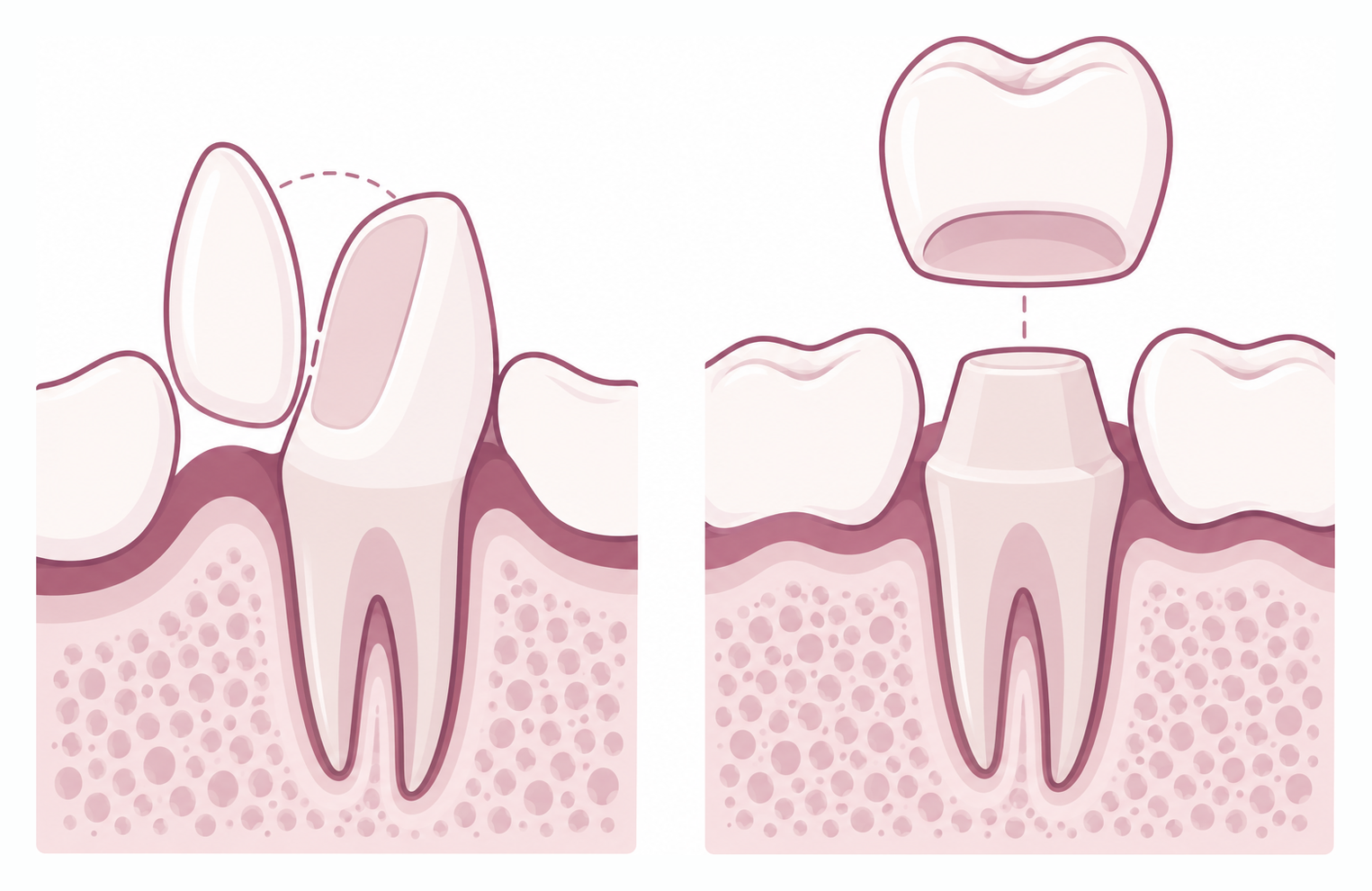
A crown is a full covering for a tooth that’s too damaged for a filling — cracked, heavily decayed, broken, or hollowed by a root canal. It caps the whole visible tooth, restoring its strength, shape and appearance, and protecting what remains underneath for the long term.
Ours are all-ceramic: strong, biocompatible and metal-free, shade-matched so closely that patients routinely lose track of which tooth was crowned. Each one is designed from a digital scan — no goopy impressions — and fitted, checked and adjusted by Dr. Basil until the bite is right.
A crown is often the conservative choice
It sounds like a big intervention, but a well-timed crown is usually the thing that saves a tooth — holding a cracked tooth together before it splits beyond saving, or armoring a root-canaled tooth so it lasts decades instead of years. The alternative to a crown at the right time is usually an extraction later.
Why our crowns look like teeth
A crown fails the eye in two places: flat, opaque color and a dark line at the gum. Ours avoid both by design — all-ceramic materials that pass light the way enamel does, digital shade-mapping against your neighboring teeth, and no metal anywhere, so there’s no gray margin waiting to show as gums naturally settle. The goal is a crown your hygienist has to find on the chart, not in your mouth.
The process
The tooth is shaped under local anesthetic and scanned digitally — no trays of impression goo — and you leave in a well-fitted temporary. The final crown comes back from the lab in about two weeks and is tried, adjusted and bonded at a short second visit. Before cementation we verify the shade, the contact with neighboring teeth and the bite, because those three details are the difference between a crown you forget and one you fidget with.
Making a crown last
A crown protects the tooth; your gums protect the crown. The margin where crown meets tooth is the one place decay can still start, so daily care along the gumline and regular hygiene visits are what buy the years. If you grind at night, a night guard shields ceramic and enamel alike. Looked after, a crown is long-term dentistry — many run well past a decade.

Free · About 60 seconds
See your new smile — before you ever sit in the chair
Upload a selfie and get an instant preview of what whitening, veneers or a smile makeover could look like on your face.
Is it right for you?
When a crown is the answer
A crown likely belongs in your plan if:
- A tooth is cracked or a piece has broken off
- A cavity is too large for a dependable filling
- A root canal has left the tooth hollow and brittle
- An old crown is failing or has a dark metal line at the gum
- A tooth is severely worn from grinding
- A single dark or misshapen tooth needs full coverage to match its neighbors
Good to know
Crown questions, answered
How long do crowns last?
Ten to fifteen years is typical, and many go well beyond — hygiene, bite forces and grinding habits are the main variables. A nightguard is cheap insurance if you grind.
Does getting a crown hurt?
The tooth is fully numbed for preparation, and most patients describe the process as uneventful. Sedation options are available if visits make you anxious.
Metal-free — does that mean weaker?
No. Modern ceramics like zirconia are exceptionally strong — strong enough for molars — while staying biocompatible and natural-looking, which is why they’re our standard.
What does a crown cost?
It varies with the tooth and the work needed beneath it. You’ll have an exact written figure — and your insurance contribution — before treatment starts.
How long does a dental crown last?
Many years — ten to fifteen is common, and plenty go longer. What decides it isn’t the ceramic, which is extraordinarily durable; it’s the health of the gum and tooth at the crown’s margin, which your home care and hygiene visits control.
Does getting a crown hurt?
No more than a large filling — the tooth is fully numbed, and most of the appointment is careful shaping and scanning. Some gum tenderness for a day or two after is normal. Nitrous oxide is available if you’re anxious.
Can you replace my old dark or metal crown?
Yes, and it’s one of our most common requests. Old crowns with gray gumlines or dead color swap out for all-ceramic ones that match your neighboring teeth — often a bigger cosmetic upgrade than people expect.



Ready to transform your smile?
Book a consultation, or call us — we keep room for emergencies during office hours.