
General dentistry
Crown & Bridge in Houston
A fixed replacement for a missing tooth, anchored on its neighbors — no surgery, nothing removable, finished in weeks.
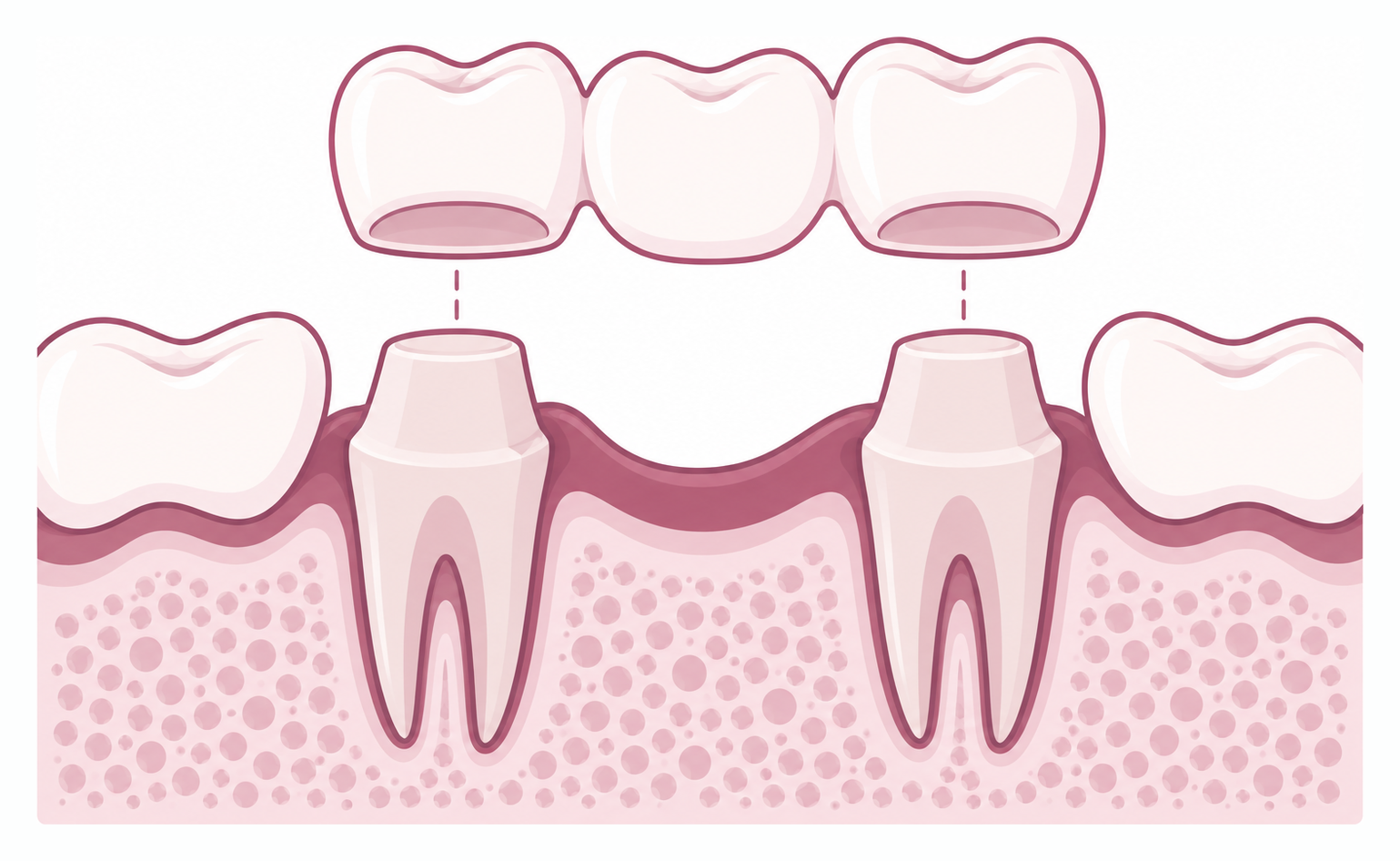
How a bridge replaces a tooth
Dr. Basil lays the bridge-versus-implant choice out honestly, with your anatomy on the screen, and lets the facts decide.
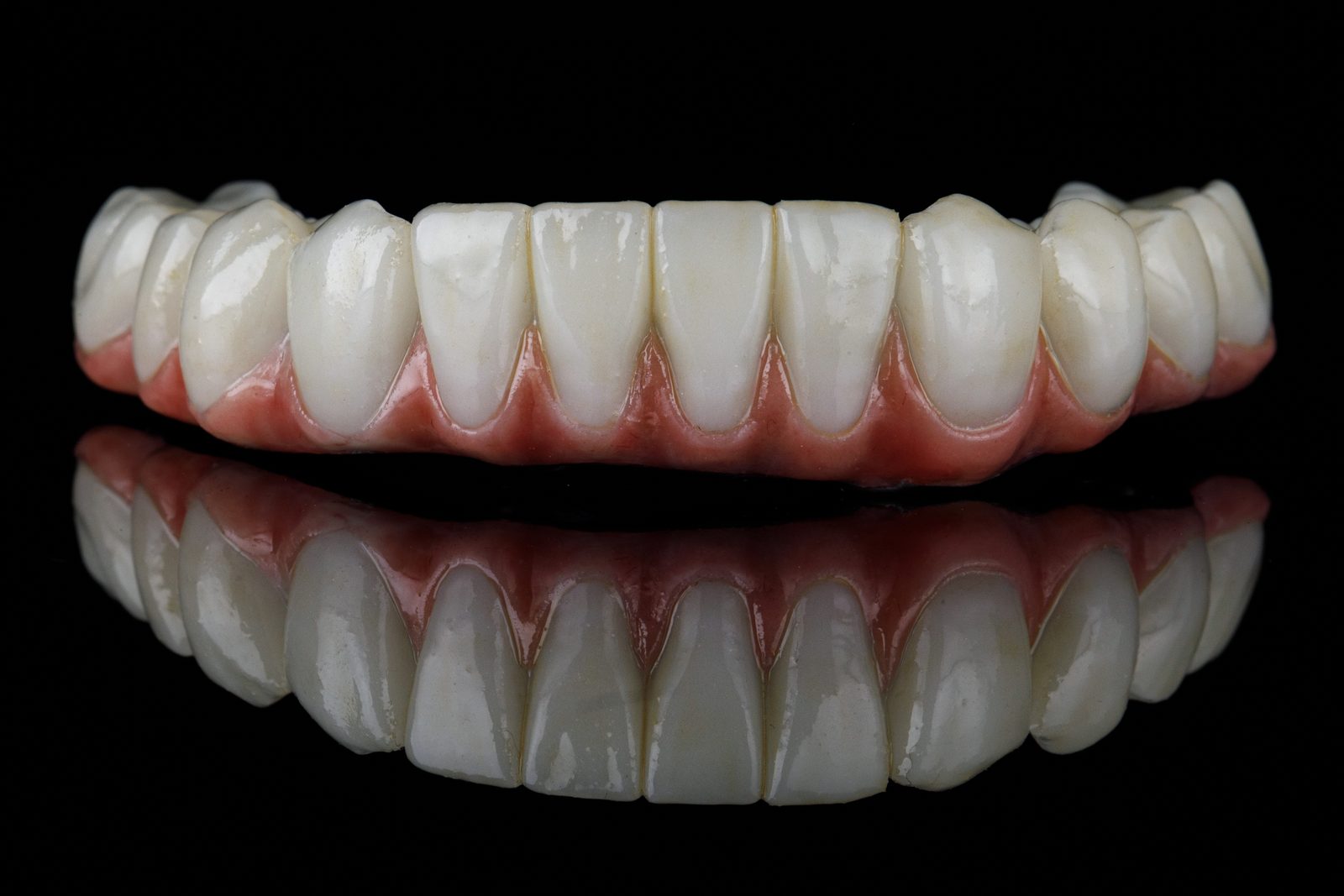
A bridge does what its name says: crowns on the teeth either side of a gap support a replacement tooth between them, all made as one seamless ceramic piece, cemented permanently in place. It looks, feels and works like three natural teeth — no surgery involved, and no taking anything out at night.
Like everything we make, bridges here are all-ceramic and designed from digital scans, matched to the teeth around them. Done well, a bridge is indistinguishable in a smile — and “done well” is the difference between a bridge that serves fifteen years and one that traps food and fails in five.
Bridge or implant?
The honest comparison: an implant replaces the tooth without touching its neighbors and stimulates the bone beneath — usually the better long-term choice when the neighboring teeth are healthy. A bridge shines when those neighbors already need crowns anyway, when surgery isn’t appealing or advisable, or when time matters. We place both, so the recommendation you get is about your mouth, not our menu.
Bridge or implant — the honest comparison
Both replace a missing tooth; they spend different budgets. An implant stands on its own, preserves the bone beneath the gap, and leaves neighboring teeth untouched — but it involves minor surgery and months of integration. A bridge is non-surgical and fast, and it’s an elegant choice when the neighboring teeth already need crowns anyway — but it asks those neighbors to carry the load, and the bone under the gap slowly resorbs. We lay both options out with your anatomy on the screen and let the facts, not the sales pitch, decide.
The process
Two visits, typically. At the first, the anchor teeth are shaped under local anesthetic and scanned, and you leave in a fixed temporary bridge — no gap, even between appointments. About two weeks later the final ceramic bridge is tried in, checked against shade and bite, and cemented. From that moment it’s simply part of your mouth: nothing comes out, nothing to learn.
Caring for a bridge
The one new habit: cleaning beneath the replacement tooth, where floss can’t drop in from above. A water flosser or floss threader handles it in under a minute a day, and it matters — the bridge lives exactly as long as the anchor teeth stay healthy. At your hygiene visits we clean where home care can’t and watch the anchors like the structural assets they are.
Is it right for you?
When a bridge makes sense
A bridge may be your best answer if:
- You’re missing a tooth and the neighbors need crowns anyway
- You want a fixed replacement without surgery
- Bone or health factors make an implant less suitable
- You want the gap closed in weeks, not months
- An old bridge is failing and needs remaking
- You’re replacing a removable partial with something fixed
Good to know
Bridge questions, answered
How long does a dental bridge last?
Ten to fifteen years commonly, longer with excellent hygiene — the critical habit is cleaning under the bridge, which we’ll show you how to do easily.
Does getting a bridge damage the anchor teeth?
The anchor teeth are shaped for crowns — which is why a bridge is at its best when those teeth already need crowns. When they’re pristine, an implant deserves a serious look first, and we’ll say so.
How many visits does it take?
Typically two: preparation and digital scanning, then fitting the finished bridge a few weeks later, with a well-made temporary between.
Can a bridge replace more than one tooth?
Yes, spans of two or more teeth are possible with adequate anchorage — and for longer spans, an implant-supported bridge is often the stronger design. Your scan will tell us which.
How long does a dental bridge last?
Many years — commonly a decade or more. The ceramic rarely quits; what decides a bridge’s lifespan is the health of the anchor teeth, which is why the daily under-bridge cleaning and your hygiene visits matter more than anything we do.
Is a bridge better than an implant?
Neither is better in the abstract — they fit different situations. Implant: preserves bone, spares the neighbors, takes longer. Bridge: faster, non-surgical, smart when the neighbors need crowns anyway. We offer both, so the recommendation is based on your mouth, not on what the office happens to sell.
Can I chew normally with a bridge?
Yes — a bridge is fixed in place and restores essentially full chewing. There’s no adaptation period to speak of; most patients eat normally within days of the final cementation.


Ready to transform your smile?
Book a consultation, or call us — we keep room for emergencies during office hours.