
General dentistry
Full & Partial Dentures in Houston
Removable replacements made properly — fitted to your mouth and your face — with implant-anchored upgrades when you’re ready to stop thinking about slipping.

Dentures worth smiling with
Dr. Basil builds dentures to fit from the start — mapped to your bite, chosen for your face, and tried in before anything is finished.
A denture replaces missing teeth with a removable appliance: a full denture when an arch has no teeth left, a partial when it clasps discreetly around the teeth you still have. The difference between a denture people tolerate and one they forget they’re wearing is entirely in the making — the fit against your gums, the bite, and teeth chosen to suit your face rather than a catalog. That’s craftsmanship territory, and it’s where we spend the time.
Dr. Basil has been fitting — and rescuing — dentures for Houston patients since 1998. If yours slips, clicks, or sits in a drawer, you don’t need a lecture; you need a better-made appliance or a smarter design, and we’ll tell you plainly which.
When you’re ready: implants change the game
The honest limitation of any conventional denture is that it rests on gums that slowly change shape. Anchoring a denture on two to four implants — or going to a fixed full arch — ends slipping and preserves the bone. Many patients start with a well-made conventional denture and upgrade when ready; we’ll design yours so that path stays open.
How a denture that fits gets made
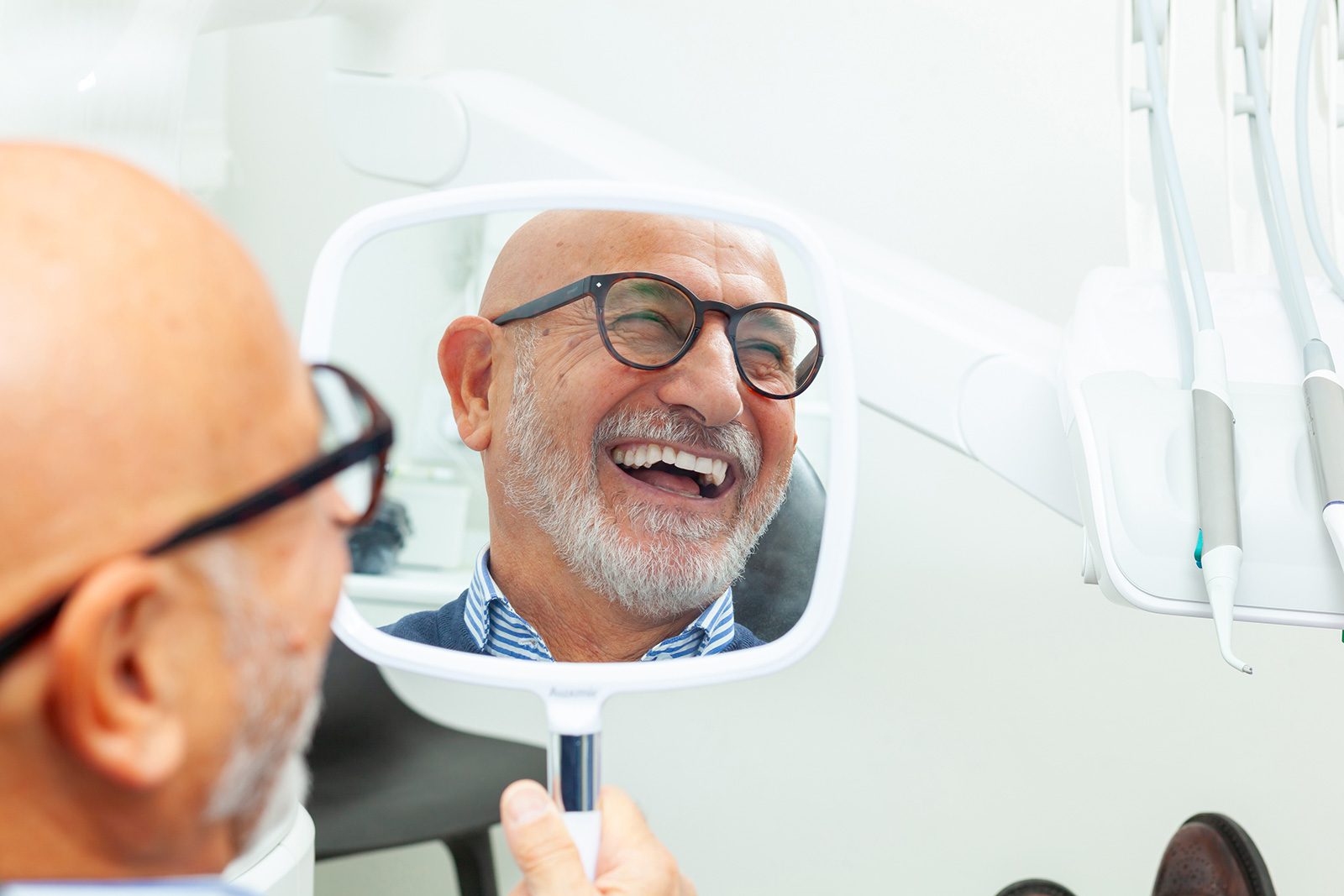
Fit is manufactured at the front of the process, not adjusted in at the end. Precise impressions and bite records map how your gums, ridges and jaw actually meet; the teeth are chosen for your face — size, shade and arrangement, not a one-look-fits-all set; and before anything is finished you approve a try-in version in your own mouth, in a mirror, with changes still easy. Delivery comes with follow-up adjustments included, because settling in is part of the process, not a complaint.
Partials that protect the teeth you keep
A partial denture lives among your natural teeth, and a well-designed one is a good neighbor: its framework distributes chewing force so the remaining teeth are supported, not strained. Poorly designed partials do the opposite — rocking and tugging until the anchor teeth loosen. It’s why we treat partial design as seriously as any restoration, and why keeping your remaining teeth healthy stays part of every visit.
When dentures meet implants
If your denture’s weakness is movement — slipping speech, careful chewing, adhesive routines — implants change the equation. As few as two implants can anchor a snap-in overdenture that clicks firmly into place, and a fixed full-arch bridge eliminates removability altogether. Many patients step up in stages. If stability is your frustration, ask; you have better options than stronger adhesive.
Is it right for you?
Who dentures serve well
Come talk it through if:
- You’re missing several teeth and want an affordable, non-surgical replacement
- Your current denture slips, hurts, or needs adhesive to behave
- You’re facing extractions and want teeth from day one — immediate dentures
- A partial could restore chewing while keeping your natural teeth
- You want to understand the implant-anchored upgrade path
- An old denture needs relining, repair or honest replacement
Good to know
Denture questions, answered
How long until I get used to a new denture?
A few weeks of adaptation is normal — speech and chewing come quickly with a well-fitted appliance. We include follow-up adjustments in your treatment, because small refinements early make all the difference.
Why does my old denture slip now when it used to fit?
Your gums and bone slowly change shape under a denture — the denture doesn’t change, your foundation does. Relining restores the fit for a while; implants stop the underlying bone loss itself.
Will people be able to tell?
Not with a properly made denture. Tooth shade, shape and arrangement are chosen for your face and age — the “piano key” look is a hallmark of cheap dentures, not dentures.
What do dentures cost?
Less than any fixed alternative, with quality tiers we’ll explain honestly. You’ll have exact written figures — for conventional and implant-anchored options — after your consultation.
How long until a new denture feels normal?
Days to a few weeks. Speech settles first (reading aloud speeds it up), chewing confidence follows, and small sore spots are normal early on — that’s what the included adjustment visits are for. Don’t soldier through a rub; a two-minute adjustment fixes it.
Should I sleep in my denture?
Generally no. Your gums need the overnight rest, and the denture needs its cleaning soak. Nightly removal is also when you’ll notice changes in fit early — worth catching, since gums and bone change slowly over the years.
Do I still need dental visits if I have full dentures?
Yes — your gums, bone and the soft tissues of your mouth still need a professional eye, your denture’s fit drifts as ridges change, and oral health screening matters at every age. Dentures replace teeth, not dental care.

Ready to transform your smile?
Book a consultation, or call us — we keep room for emergencies during office hours.